Thank Senator Cantwell For Championing The Roadless Area Conservation Act
By Amanda Bullis
With the escalation in the fight over public lands since Trump took office in January 2025, you might have heard of the Roadless Rule and the Trump administration’s intent to rescind it. What you may or may not know is that Senator Maria Cantwell (D-WA), who represents Washington state in the Senate, is one of the most steadfast champions of the Roadless Area Conservation Act (RACA), a bill that would permanently protect our roadless areas — and has been since she first introduced it to Congress in 2002.
This past March, WEAN staff and members of the board traveled to Eugene, Oregon, to attend the
Public Interest Environmental Law Conference (PIELC), hosted by the law student-run environmental society
Land Air Water at the University of Oregon. It was the current staff’s second time attending the conference, which celebrated its 44th anniversary this year. Given the current administration’s focus on rolling back environmental protections to allow logging, drilling, and mining on public land, much of
the conference programming focused on how we can defend our most precious places.
A panel of particular note was
“Defending The Roadless Rule,” presented by Sami Godlove from
Oregon Wild, Kristen Boyles from
Earthjustice, Alex Craven from the
Sierra Club, Len Montgomery from
Environment America, Kristin Gendzier from the
Southern Environmental Law Center, and Garett Rose from the
NRDC. The panelists' presentations focused on the history of the Roadless Rule, the Trump administration's current repeal attempt, and the opportunity to codify protections for our nation’s roadless areas through passing the Roadless Area Conservation Act (RACA).
And, to the surprise of this author, Washington Senator Maria Cantwell's relentless advocacy was at the center of the story.
A Brief Overview Of The Roadless Rule
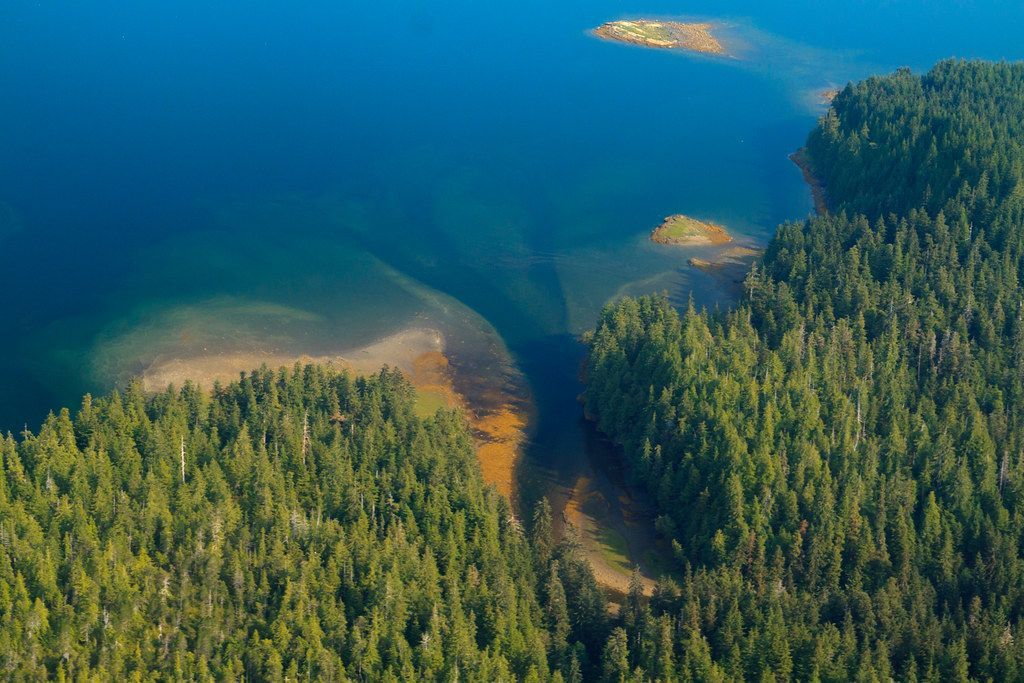
The Roadless Area Conservation Rule, known as the “Roadless Rule,” was established in 2001 at the tail end of the Clinton presidency after over 600 public hearings and over 1.6 million comments from Americans, 95% of which were in support of the rule. The Roadless Rule, like other rulemaking measures, is a process by which a rule is created by an agency to inform aspects of the authority of that agency. The U.S. Forest Service, which oversees federal public forest lands, is housed under the U.S. Department of Agriculture, the agency that administers the Roadless Rule.
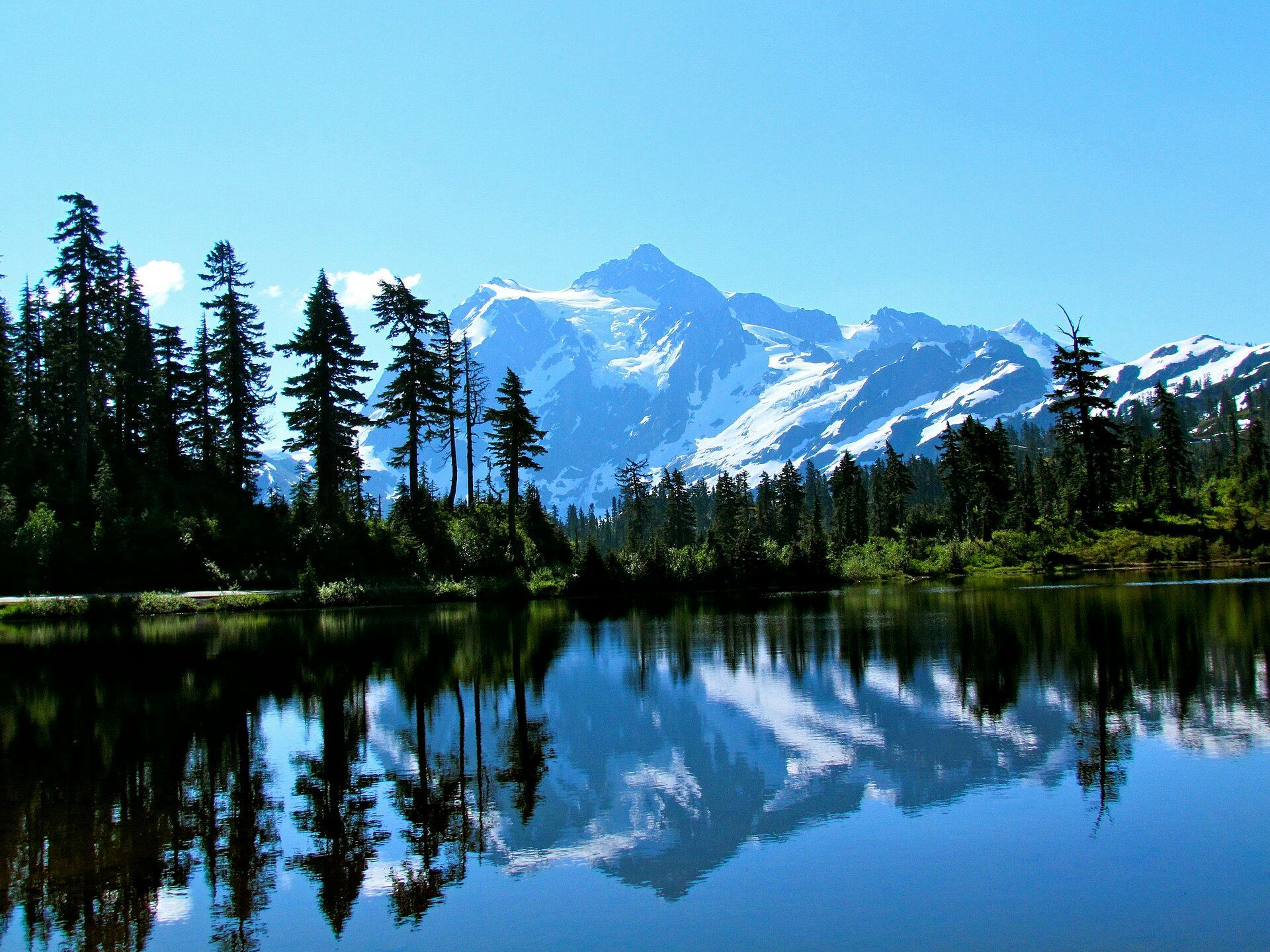
The Roadless Rule administratively protects 58.2 million acres of roadless national forestland across 39 states, some of the last “wild places” in America, from road construction and logging. Some well-known wilderness areas currently protected by the rule are 9.3 million acres of the Tongass National Forest in Alaska and Mt. Baker-Snoqualmie National Forest here in Washington state.
Before the rule, the Department of Agriculture was directed by the Wilderness Act of 1964 to identify undeveloped federal land with "wilderness potential," and to make recommendations to the President regarding the suitability of those lands for wilderness designation. The Forest Service attempted to inventory and review roadless areas for wilderness potential twice, but the results were blocked, according to Congress.gov. When the Roadless Rule was implemented in 2001, it explicitly prohibited road construction, road reconstruction, and timber harvesting in Forest Service Inventoried Roadless Areas (IRAs), except for National Forest Lands in Colorado and Idaho. Inventoried Roadless Areas protected by the Roadless Rule currently make up roughly 30 percent of National Forest Lands in the U.S according to the U.S. Department of Agriculture.
On the heels of agency implementation of the Roadless Rule in 2001, the Roadless Area Conservation Act (RACA) was first introduced in Congress (S.2790) in July of 2002 by a bipartisan group of legislators led by Senator Maria Cantwell, who sponsored the bill. The legislation was designed to codify the original 2001 Roadless Area Conservation Rule into law.
"[W]e have concluded that to protect roadless areas for future generations, Congress must take action to enact the Roadless Area Conservation Rule. Congress must embrace the public opinion that helped generate the rule in the first place and prevent special interests from stopping the rule dead in its tracks," Cantwell said in
her statement introducing the Roadless Area Conservation Act in 2002. "Without this legislation, I am convinced that this balanced roadless policy will die a painful death and our greatest opportunity in a generation to protect our national forests will be lost."
The Roadless Area Conservation Act of 2002 was "read twice and referred to the Committee on Energy and Natural Resources" in the Senate, where the bill died, leaving only administrative protection for our roadless wilderness through the Roadless Rule. The Roadless Rule was immediately challenged in court, and over the years, multiple suits have been brought with the intention of having the rule rescinded.
If you're interested in learning more about the litigation history of the Roadless Rule, EarthJustice has a great comprehensive timeline of the rule and the legal challenges brought against it.
Since her initial introduction of the Roadless Area Conservation Act in the 2001-2002 legislative session, Cantwell has reintroduced RACA ten times in the Senate. She reintroduced the bill in the Senate in 2003-2004 session with fourteen co-sponsors of the bill, including Senator John Warner (R-VA); again in the 2005-2006 legislative session after the Bush administration attempts to repeal the Roadless Rule (S.2364); in 2007 (S.1478); in 2009 (S.1738), in 2011 (S.1891) in 2018 (S.3333); in 2019 (S.1311); in 2021 (S.877) to reinforce protections for the Tongass National Forest after the state of Alaska requested exemption for the 9.3 million acres of roadless area in the Tongass from the Roadless Rule (the exemption was initially granted in 2020 and later rescinded in 2023); and again in 2023 (S.1831).
Despite bipartisan and bicameral support throughout the years, and Cantwell's dogged persistence, RACA has yet to pass through Congress.
Imminent Threat Of Rule Rescission And The Reintroduction Of RACA In Congress
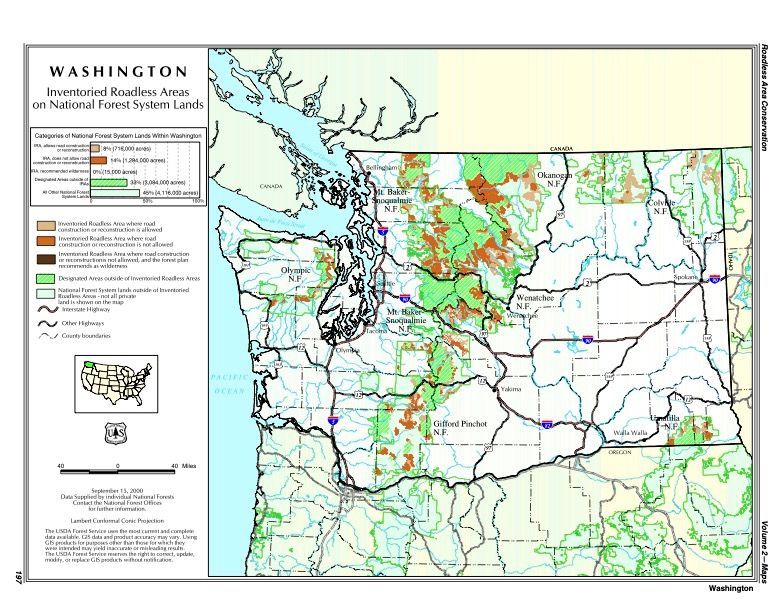
On June 23, 2025, U.S. Department of Agriculture Secretary Brooke L. Rollins announced the intent to rescind the 2001 Roadless Area Conservation Rule, with the administration eyeing roadless federal land for timber harvest and the Tongass National Forest in Alaska for industrial logging and mineral mining. The rescission of the rule would open millions of acres of wildlands across the country to road infrastructure and logging, including approximately 2 million acres of roadless federal forests in Washington state currently protected by the rule.
In August of 2025, the Department of Agriculture published a notice of intent to prepare an environmental impact statement (EIS) for the effects of the proposed rescission, and a public comment period was held on the preliminary process that closed in September of 2025. The USDA received over 22,000 comments from the public during this first comment period.
Now the USDA is working on completing a draft environmental impact statement and proposed rule. According to the USDA website, those were expected to be released in early 2026. As of the publication of this article in May of 2026, we are still waiting for the draft to be released and for dates for the public comment period for the 2026 Roadless Rule Rescission EIS to be published by the USDA.
The same month that the Department of Agriculture announced the intent to rescind the rule, the Roadless Area Conservation Act (RACA) was reintroduced in Congress by a bicameral group of legislators. Undeterred by previous blocks, Cantwell
led the charge to reintroduce the bill in the Senate yet again in June of 2025 (S.2042), this time with fellow Senator Ruben Gallego (D-AZ) and Representatives Andrea Salinas (OR-06) and Yassamin Ansari (AZ-03) in the House (H.R. 3930). Right now, the Senate bill has
twenty-five co-sponsors, including Senator Patty Murray (D-WA). The House bill has
eighty co-sponsors, including Representative Rick Larsen (WA-02).
“Mounting climate impacts have increased the need to protect America’s last remaining wild forestlands, which reduce wildland fire risk and store huge amounts of carbon,” Sen. Cantwell said in a press release regarding the Roadless Area Conservation Act of 2025. “Roadless areas provide Washingtonians with unmatched outdoor recreation opportunities, clean drinking water for our communities, and habitat for numerous endangered species. We need to redouble our efforts to permanently preserve the benefits these public lands provide our nation and future generations.”
Because the Roadless Rule is an administrative protection, which can be rescinded by an agency without any other process besides public comment, it carries less protection than a legislative action. Passing the Roadless Area Conservation Act (RACA) in Congress would codify protections for our national forests — because rescission of that protection would require an act of Congress.
The Roadless Area Conservation Act of 2025, as outlined in a press release on Cantwell’s website, would:
- Protect, in perpetuity, 58.5 million acres of roadless national forest in 39 states;
- Ensure the more than 240 million people living within 100 miles of a national forest or national grassland retain access to opportunities for outdoor recreation, including hiking, camping, hunting, fishing, mountain biking, and backcountry skiing;
- Safeguard watersheds in national forests and roadless areas that provide clean drinking water for over 60 million Americans;
- Save taxpayers millions of dollars by limiting costly new road building, allow the Forest Service to focus on maintaining its existing 371,581-mile network of National Forest System roads, and reduce its multi-billion dollar backlog of deferred maintenance on its existing road system;
- Maintain exemptions for hydropower development, public safety, and firefighting needs;
- Uphold the 9th and 10th U.S. Circuit Courts of Appeals decisions, as well as a decision by the U.S. District Court for the District of Columbia, in support of the Roadless Rule.
The Roadless Area Conservation Act of 2025 is a critical piece of legislation that has the power to permanently protect roadless areas across the United States — precious places that are currently under imminent threat of logging, drilling, and mining by the federal government if the Roadless Rule is rescinded.
For over twenty years, our Senator has tirelessly brought this piece of legislation back to the Senate floor over and over again — let’s show her how much we appreciate it.
Take Action
Thank Senator Cantwell For Her Dogged Advocacy
Thank Senator Cantwell for continuing to champion this critical piece of legislation and show your support for the Roadless Area Conservation Act of 2025 (H.R. 3930/S.2042) in Congress during the upcoming legislative session.
Thank Senator Murray For Co-Sponsoring RACA
Senator Murray has co-sponsored the Roadless Area Conservation Act seven times, including current Senate Bill 2042. Thank her for continuing to support legislation that will protect over 2 million acres of Washington's wild places.
Thank Representative Larsen For Co-Sponsoring RACA
Representative Rick Larsen has co-sponsored the Roadless Area Conservation Act in the House six times, including current House Bill 3930. Thank him for continuing to support legislation that will protect over 2 million acres of Washington's wild places.
Stay Up To Date On The Roadless Rule
Track the Roadless Rule rescission attempt on the USDA Roadless Rule page. When the next comment period opens, submit a comment in support of retaining the Roadless Area Conservation Rule.