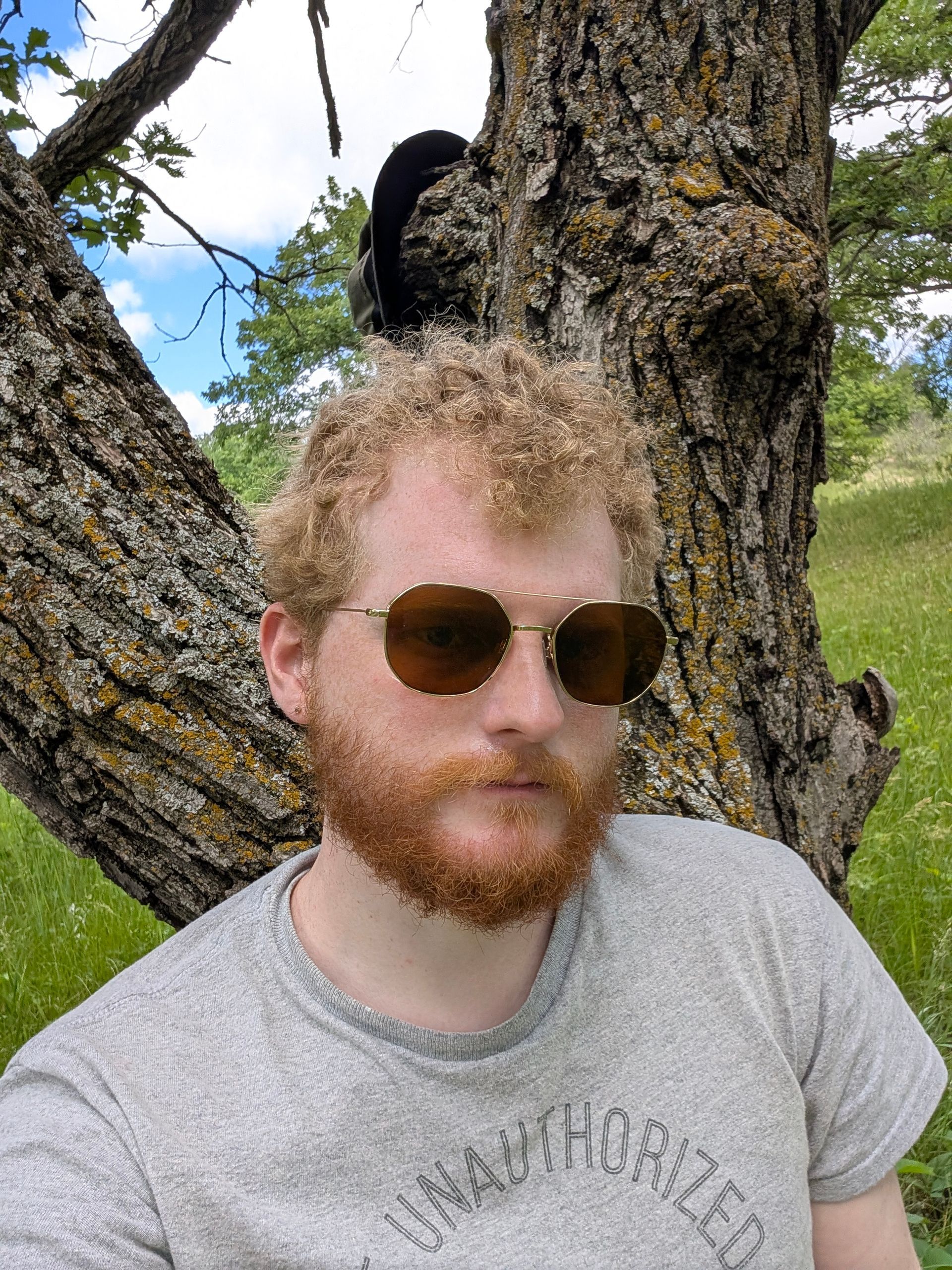
Neil Hauta Shares The Buzz On Some Exceptional Native Insects
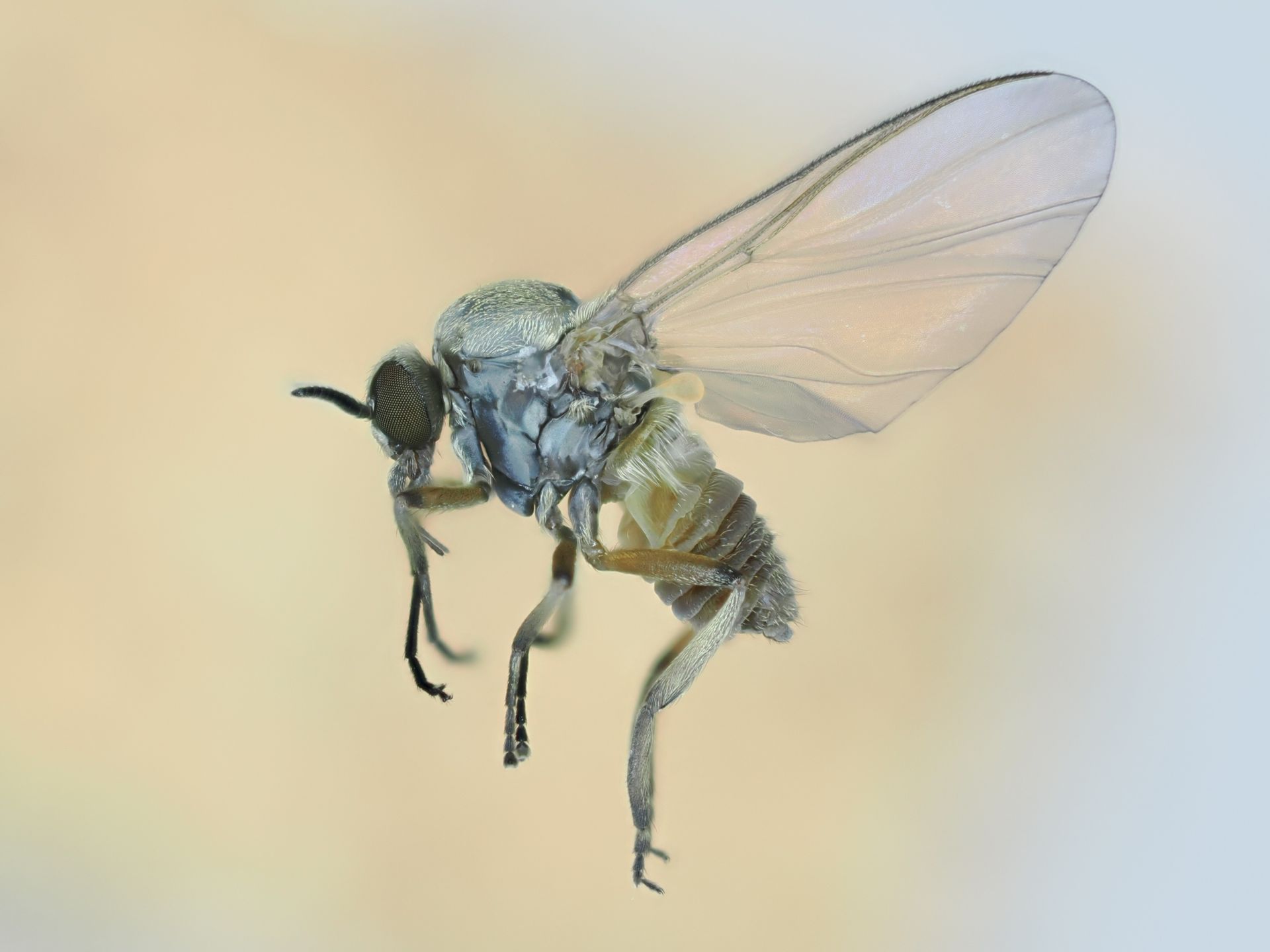
You might say that it was a romantic gesture that first got WEAN Board member Neil Hauta interested in flies three years ago: “There's a group called dance flies, and some dance flies have an interesting mating behavior where the males will catch prey and wrap it in a silk balloon,” he says. “Then, they offer those to the females as gifts for mating. It's a very endearing behavior that’s uncommon for the insect world.”
Moving to Whidbey Island in 2021, Hauta has been on WEAN’s Board for the past three years. He will soon be stepping down, and WEAN is tremendously grateful for his service to our community and his willingness to share his love and knowledge of flies before he goes.
Hauta’s affinity for nature stems from a childhood growing up in northern Minnesota in a town of just 600 people. “It was pretty remote and had all sorts of critters: deer and birds, and occasionally mountain lions. It was a cool place to live.” At his parents’ and grandparents' houses he enjoyed observing animals. Ants, in particular, were a source of fascination: “I've always loved trying to think about what life would be like if you were them.”
His curiosity expanded to include other insects, like the oh-so-charming dance flies who, in addition to their gift-giving love language, possess interesting bird-like beaks. But when it comes to who’s the fairest fly of them all, it’s no contest: the black fly. “The name ‘black flies’ is very misleading, ” says Hauta, explaining that as larvae they can have eye-catching pigment patterns, such as red bands, or green with red spots. In the pupa lifestage, their respiratory organs, or gills, branch out like trees in ornate patterns from their cocoons. These patterns are distinct and can help identify them. By the time they reach adulthood, they take on a velvety-like appearance with their thorax revealing different patterns and colors, depending on the light.
“They require flowing water to grow, so they start their life in streams and rivers,” says Hauta—unlike mosquitoes, which need a stagnant pool. As larvae, they can resemble little worms, which attach themselves to stream rocks and vegetation via little hooks. “When they become an adult, they sort of ride a little air bubble from their cocoon up to the surface and then fly out of the water.”
Fly families, as it turns out, are a very diverse group of insects, and their speciose existence can make them a challenge to study. “They're very difficult organisms to separate into species. Sometimes, it's only possible to separate them by looking at their chromosomes under a microscope. So we're talking about very, very fine differences.” Additionally, studies also tend to be funded when an organism is affecting the human economy. “If it's interfering with timber production or agricultural production, then we care. But a lot of these species that are just kind of out there and not necessarily doing anything that interacts with human development—we don't put as much money into learning about them.” These challenges are what make Hauta’s discovery of two species of black fly—never-before recorded in the state of Washington—so exciting.
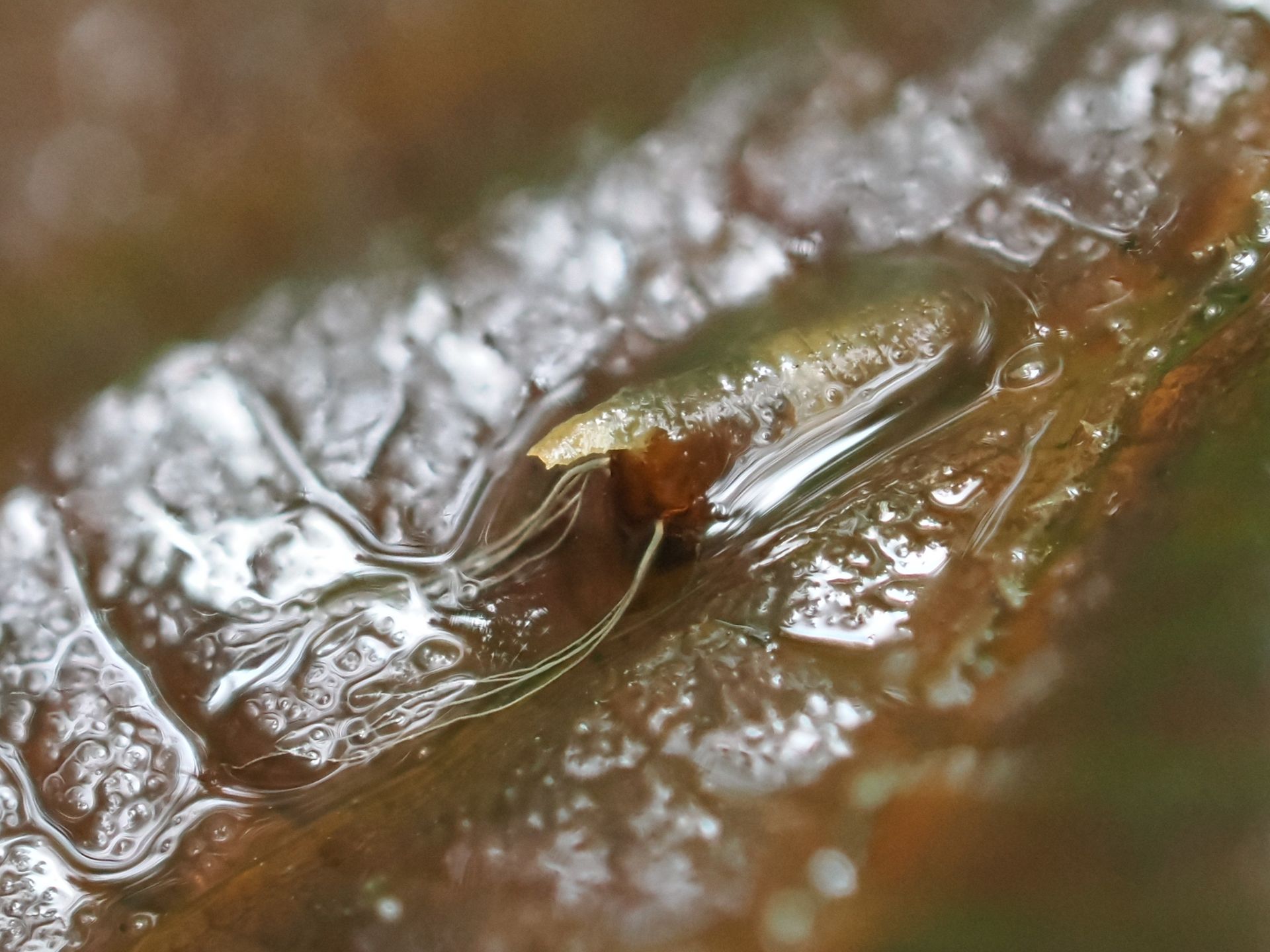
The first is called Stegopterna xantha, or yellow-headed black fly, whose larvae heads exhibit a yellow hue. Hauta located a member of this species in a small stream on Land Trust property on Whidbey. The second he found on a leaf in a stream near Mukilteo. Called Simulium craigi, they have long gills and a horn-like protrusion on the pupa. Hauta confirmed his findings with Dr. Peter Adler, an entomology expert at Clemson University.
Using a macro lens and a lot of patience, Hauta has been able to capture images of these, and many other insects, which he shares on
iNaturalist. This phone app helps identify any organism you might encounter—from birds to mushrooms, and more. “It gives you a lot of really great feedback from actual biologists or botanists, depending on whatever you're photographing, and for me, it's been a great way to meet other people who are interested in flies.” However, when Hauta first joined the app, the number of quality black fly images were limited. “I thought it'd be cool if I started filling in the gaps a little bit and actually going out and taking some nice photographs to the level that they're identifiable from photos, so that was a little challenge that I took up.”
Black flies and dance flies are just two of many unique insects and critters that call Whidbey Island home. Hauta points to springtails, which are round and hairy with little, bunny-like ears, as well as the Bembix americana wasp, the wasp genus Polyaulon, which have bright red wingless females, and large yellowjacket mimic flies, Sphecomyia pattonii, which pollinate the mustard plants at Ebey's Landing.
With such biodiversity, how as islanders can we be better stewards to our insect population? Hauta says that one of the best things people can do is eschew empty, grasscut lawns in favor of growing native plants: “Replacing lawn that provides no ecological support to the local population is a really big thing that you can do that makes a huge difference if everybody does it.”
Another thing you can do? Get on iNaturalist! Hauta says it has opened up his eyes to the tremendous level of diversity that exists right in your own yard. “It’s amazing how many things live alongside you that you wouldn't even know about,” he says, “and it's a joy to start to put names to a few of your neighbors that way.” And if you’re really lucky, you might even discover a new species while you’re at it.
Thank you Neil, you will be greatly missed and we wish you very well in your next chapter! Want to keep up with Neil’s insect discoveries? Check out more of Hauta’s iNaturalist observations
here.